
By Joshua Imiavan | COREN Registered Engineer | Construction Management Specialist
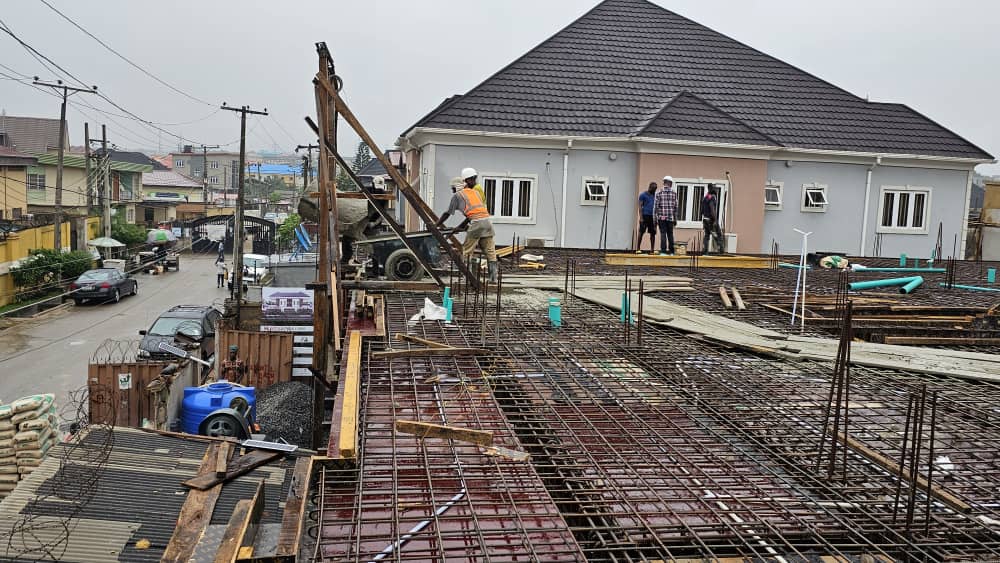
The Complete Standard Operating Procedure (SOP) for Residential Construction in Nigeria: From Foundation to Completion
| “Building a house in Nigeria without a proper process is one of the most expensive mistakes a property owner can make. This SOP is designed to guide developers, property owners and investors through every critical stage of residential construction — the professional way.” — Joshua Imiavan |
Every year, thousands of Nigerians lose millions of naira to building failures, structural defects, contractor fraud, and regulatory violations — all because construction projects were executed without a clear, professional Standard Operating Procedure (SOP).
As a COREN-registered construction manager and structural engineer with experience across all 36 states of Nigeria, I have developed this comprehensive SOP to serve as a definitive guide for anyone embarking on a residential construction project in Nigeria.
Whether you are building a 2-bedroom bungalow in Ado-Ekiti, a duplex in Lagos, or an apartment block in Abuja, this process applies. Follow it precisely and you will save money, avoid legal problems, and end up with a structurally sound building.
Why Every Nigerian Construction Project Needs a Formal SOP
Many building collapses and construction failures in Nigeria share a common root cause: the absence of a structured, documented process. A formal SOP provides:
- A clear roadmap from start to finish for all parties involved
- Accountability at every stage of construction
- Legal and regulatory compliance with Nigerian building codes
- Quality control benchmarks that protect your investment
- Documentation that is required for bank financing and insurance
- Protection against contractor negligence and material substitution
| ⚠️ Important: In Nigeria, the National Building Code (NBC) mandates that all construction projects follow approved processes. Non-compliance can result in building demolition by local authorities regardless of how much money you have invested. |
PHASE 1: Pre-Construction Stage
This phase happens before a single block is laid. It is the most important phase because mistakes here are the most expensive to correct.
Step 1.1 — Site Assessment and Soil Investigation
| STEP 1 | Site Assessment & Soil Investigation Before any structural drawings are produced, a geotechnical soil test must be conducted on the land to determine the bearing capacity of the soil and the appropriate foundation type. |
The soil investigation report will determine:
- Foundation type — strip, pad, raft, or pile foundation
- Foundation depth required
- Concrete mix ratios suitable for the soil condition
- Whether the soil requires treatment or compaction
⚠️ Professional Warning: Never allow a contractor to determine your foundation type based on experience alone. Always insist on a documented soil test report. This single step prevents the majority of structural failures in Nigeria.
Step 1.2 — Architectural and Structural Drawings
| STEP 2 | Structural Drawings Production Engage a COREN-registered structural engineer to produce comprehensive structural drawings before construction begins. |
The structural drawing set must include:
- Site plan showing the building position on the plot
- Floor plans for all levels
- Sections and elevations
- Foundation plan and details
- Column and beam schedules
- Reinforcement details (bar bending schedules)
- Roof structural plan
- Mechanical, Electrical and Plumbing (MEP) drawings
As a COREN-registered engineer, I produce all structural drawings to Nigerian Industrial Standards (NIS) and British Standards (BS 8110) which are the accepted codes of practice for structural engineering in Nigeria.
Step 1.3 — Regulatory Approvals and Documentation
| STEP 3 | Obtaining Building Permit Submit your drawings to the relevant government authority for building plan approval before construction begins. This is a legal requirement in all Nigerian states. |
The approval process typically involves:
- Submission of architectural and structural drawings to the State Urban Planning Authority
- Payment of prescribed fees
- Inspection of the site by government officials
- Issuance of Building Permit / Development Permit
- Commencement Notice before breaking ground
| 📌 Note: Building without an approved permit is illegal in Nigeria and can result in the demolition of your structure even after completion. Always obtain your permit FIRST. |
PHASE 2: Foundation Construction Stage
With approved drawings and a building permit in hand, physical construction can now begin. The foundation is the most critical structural element — it must be executed with absolute precision.
Step 2.1 — Setting Out
| STEP 4 | Site Setting Out Setting out transfers the building dimensions from the approved drawings onto the actual ground using pegs, strings and a theodolite to establish exact column and wall positions. |
Setting out must be done by a qualified professional. Errors at this stage will be built into every subsequent floor and are extremely expensive to correct.
Step 2.2 — Excavation
| STEP 5 | Foundation Excavation Excavation is carried out to the depth specified in the structural drawings based on the soil investigation report. Never reduce foundation depth to save cost. |
Site supervision checklist during excavation:
- Confirm excavation depth matches structural drawings
- Check that the soil at formation level matches the soil report description
- Ensure excavated surfaces are clean and firm before concrete is poured
- Check for underground utilities or water before excavating
Step 2.3 — Foundation Construction and Concrete Works
| STEP 6 | Foundation Concrete & Reinforcement Foundation reinforcement must be placed exactly as shown in the structural drawings. Concrete mix ratios must follow the specification — never allow ratio substitution to save cost. |
Standard foundation concrete specification for residential buildings in Nigeria:
- Blinding concrete: 1:3:6 (cement:sand:granite)
- Structural concrete for foundations: minimum 1:2:4 (Grade 20)
- Reinforcement: high yield steel bars as specified in drawings
- Concrete cover to reinforcement: minimum 40mm for foundations
Site Supervision Role: As construction manager, I conduct mandatory site inspections at every concrete pour stage. No concrete is poured without my sign-off on the reinforcement placement. This is non-negotiable.
PHASE 3: Superstructure Construction Stage
The superstructure is everything above the foundation — columns, beams, slabs, walls and roof. This phase requires continuous professional supervision.
Step 3.1 — Column Construction
| STEP 7 | Column Reinforcement & Casting Columns are the vertical load-bearing elements that transfer loads from the building to the foundation. Every column must be reinforced exactly as specified in the structural drawings. |
Column construction checklist:
- Verify bar sizes and spacing match the column schedule in drawings
- Check starter bars from foundation are correctly lapped
- Ensure column formwork is plumb and properly braced
- Confirm concrete mix ratio before pouring
- Cure concrete for minimum 7 days before striking formwork
Step 3.2 — Beam and Slab Construction
| STEP 8 | Beam & Slab Construction Beams and slabs form the floor and roof systems. They must be designed and constructed to carry all dead loads, live loads and environmental loads safely. |
Supervision checklist for beams and slabs:
- Confirm formwork is adequately propped and level
- Check beam reinforcement — top bars, bottom bars and links/stirrups
- Verify slab reinforcement — top mesh and bottom mesh
- Ensure all services (pipes, conduits) are cast in before concrete pour
- Conduct pre-pour inspection and sign off before any concrete is placed
- Maintain concrete curing for minimum 21 days for slabs
Step 3.3 — Blockwork and Walling
| STEP 9 | Wall Construction Walls in Nigerian residential buildings are typically 225mm sandcrete blockwork. Block quality must be verified before use on site. |
Block quality control checklist:
- Blocks must be properly cured — minimum 28 days old before use
- Verify block strength — crush test if in doubt
- Mortar ratio: 1:6 (cement:sand) for internal walls, 1:4 for external
- Ensure proper bonding pattern — no continuous vertical joints
- Install lintels over all openings as specified in drawings
PHASE 4: Finishing Stage
The finishing stage transforms a structural shell into a liveable building. While less technically complex than the structural stage, quality control remains essential.
Step 4.1 — Roofing
| STEP 10 | Roof Construction The roof must be constructed strictly to the approved roof structural plan. Use of substandard roofing materials is one of the most common cost-cutting measures that leads to expensive repairs. |
- Install roof structural members as per drawing specifications
- Use minimum 0.55mm thick aluminium roofing sheets for residential
- Ensure all roof members are properly treated against termites
- Install proper roof drainage and gutters
Step 4.2 — Plastering, Screeding and Tiling
| STEP 11 | Internal & External Finishes Plastering protects the structure and provides the finish surface for painting. Screeding provides the level base for floor finishes. |
- External plaster: 1:4 cement:sand, minimum 15mm thick
- Internal plaster: 1:6 cement:sand, minimum 12mm thick
- Floor screed: 1:3 cement:sand, minimum 50mm thick
- Allow screed to cure for 7 days minimum before tiling
Step 4.3 — Mechanical, Electrical and Plumbing (MEP)
| STEP 12 | MEP Installations All plumbing, electrical and mechanical installations must be completed before final finishes are applied. Engage licensed professionals for electrical and plumbing works. |
- Electrical: engage a COREN or COREN-approved electrician
- Plumbing: test all pipework under pressure before concealing
- Ensure earthing and bonding is properly done for electrical safety
- Install appropriate capacity distribution board for the building
PHASE 5: Completion and Handover Stage
Step 5.1 — Final Inspection and Snagging
| STEP 13 | Snagging & Final Inspection Before handover, a comprehensive snagging inspection identifies all defects, incomplete works and items not meeting specification. Nothing is accepted below standard. |
Final inspection covers:
- Structural integrity — check for cracks, settlement or movement
- All doors and windows operate correctly
- All electrical points are live and properly labelled
- All plumbing fixtures are leak-free and properly fitted
- All finishes are to specified standard
- External drainage and compound works are complete
Step 5.2 — Certificate of Completion
| STEP 14 | Regulatory Completion Certificate After construction, notify the relevant government authority to inspect and issue a Certificate of Completion. This document is essential for the building’s legal status. |
The Completion Certificate is required for:
- Change of use applications
- Mortgage and bank financing on the property
- Building insurance
- Sale of the property
Construction Process Summary — At a Glance
| # | Phase | Key Activities | My Role |
| 1 | Pre-Construction | Soil test, structural drawings, building permit | Lead structural engineer |
| 2 | Foundation | Setting out, excavation, foundation concrete | Site supervision & sign-off |
| 3 | Superstructure | Columns, beams, slabs, blockwork | Continuous site supervision |
| 4 | Finishing | Roofing, plastering, MEP installations | Quality control inspection |
| 5 | Completion | Snagging, completion certificate | Final inspection & handover |
Work With Joshua Imiavan on Your Construction Project
| Are you planning a residential construction project in Nigeria? Whether you are in Lagos, Ado-Ekiti, Abuja or any of the 36 states, I provide professional construction management, structural engineering drawings and site supervision services that ensure your project is delivered to the highest standard — on time and within budget. |
My services include:
- Structural engineering drawings and calculations
- Building permit and regulatory approval processing
- Construction management from foundation to completion
- Professional site supervision and quality control
- Building development partnerships
- Construction business development consulting
📞 Call/WhatsApp: +234 803 3790 432
📧 Email: joshuaimiavan@joshpat.com.ng
🌐 Website: www.joshpat.com.ng
About the Author
Joshua Imiavan is a COREN-registered construction manager and structural engineer with extensive experience delivering residential and commercial construction projects across Nigeria. Based in Ado-Ekiti, Ekiti State, he operates nationwide, helping property owners, developers and investors build quality, compliant structures through professional construction management and structural engineering services.